Introduction
If you’re looking to enhance your Gua Sha routine, using the right face oil for Gua Sha is a game-changer. Not only does it provide the perfect slip for your tool, but it also helps nourish and hydrate your skin, leaving it glowing and rejuvenated. Whether you’re new to Gua Sha or a seasoned pro, choosing the right face oil can elevate the experience and amplify the benefits. In this post, I’ll share my personal tips and insights on how to choose the best face oil for Gua Sha, how to apply it for maximum results, and why it’s an essential step in your skincare routine.
Table of Contents
Why Face Oil Matters: The Key to a Smooth Gua Sha Routine
When I first started using Gua Sha, I made the mistake of trying it on dry skin. Let me tell you—it wasn’t pleasant! The stone dragged, my skin felt irritated, and instead of that relaxing, sculpting effect everyone raved about, I was left with redness and discomfort. That’s when I realized how essential using the right face oil for Gua Sha really is.
Applying a good face oil for Gua Sha before your session makes all the difference. It allows the tool to glide effortlessly over your skin, preventing unnecessary tugging or pulling. More importantly, the oil acts as a nourishing base, helping your skin absorb beneficial ingredients while enhancing the overall effects of your Gua Sha practice.
Glide Without Friction
The biggest reason to use a face oil for Gua Sha is to create that perfect slip. Without it, the tool won’t move smoothly across your skin, which can lead to irritation and even fine lines over time. A lightweight, non-greasy oil is ideal—it should allow your Gua Sha stone to flow effortlessly while still sinking into your skin.
Boosting Absorption of Nutrients
One thing I love about Gua Sha is that it’s not just about the massage—it’s also about skincare. When you choose the right face oil for Gua Sha, you’re giving your skin a dose of hydration, antioxidants, and essential fatty acids. The gentle massaging action helps push these nutrients deeper into your skin, maximizing their benefits.
Enhancing the Sculpting & Lifting Effects
I’ve noticed that when I use a hydrating and nourishing face oil for Gua Sha, my skin looks more sculpted and plump after the session. The oil helps the stone glide along my facial contours, allowing me to apply the right amount of pressure without dragging. This makes it easier to define my jawline, lift my cheekbones, and reduce puffiness around my eyes.
Preventing Irritation & Redness
Some people skip face oil because they worry about clogged pores, but trust me—using the right face oil for Gua Sha can actually soothe and balance your skin. A lightweight, non-comedogenic oil can reduce inflammation, calm redness, and support your skin barrier while you massage.
If you’ve ever felt like your Gua Sha routine isn’t giving you the best results, try switching up your face oil. It’s a simple change that can completely transform your experience!
Best Ingredients to Look for in a Face Oil for Gua Sha
f there’s one thing I’ve learned about Gua Sha, it’s that the right face oil for Gua Sha can make or break your results. When I first started, I wasn’t sure if using oil was necessary—I figured my regular moisturizer would be enough. But after a few sessions, I realized that face oil wasn’t just a nice extra; it was essential for achieving that smooth, glowing complexion everyone raves about.
Hydration That Lasts
One of the biggest benefits of using a face oil for Gua Sha is the deep hydration it provides. Unlike water-based moisturizers that evaporate quickly, face oils lock in moisture and keep my skin soft and plump throughout the day. After a session, my skin always feels nourished and supple rather than dry or tight.
The Secret to That Radiant Glow
I used to think that achieving glowing skin required endless highlighters and serums, but once I started incorporating the right face oil for Gua Sha, I noticed an immediate difference. The oil helps the stone glide effortlessly, improving circulation and boosting my skin’s natural radiance. After just a few strokes, my face looks more awake, refreshed, and naturally luminous.
Supporting Lymphatic Drainage for a Healthier Complexion
One of my favorite things about Gua Sha is its ability to reduce puffiness and detoxify my skin through lymphatic drainage. But for this to work properly, I need an oil that allows the tool to move seamlessly. Without it, the stone drags, and I don’t get the same sculpted, de-puffed results. Using a lightweight face oil for Gua Sha helps me achieve that fresh, sculpted look every morning.
Boosting Skincare Absorption
Since Gua Sha helps push products deeper into the skin, I always make sure to use a high-quality face oil for Gua Shapacked with skin-loving ingredients. Whether it’s rosehip oil for brightening, jojoba oil for balancing, or squalane for hydration, I know that my skin is getting maximum benefits from every drop.
If you’ve been struggling to get that effortless, natural glow from Gua Sha, try upgrading your face oil. It’s the key to transforming your skincare routine and giving your skin the hydration, nourishment, and radiance it truly deserves!
Face Oils for Different Skin Types: Finding Your Perfect Match
When I first started using face oil for Gua Sha, I was a little nervous. I worried that the wrong oil might clog my pores or make my skin feel greasy. But once I found the right oil for my skin type, everything changed. My Gua Sha routine became smoother, and my skin looked healthier, more balanced, and naturally radiant.
Not all face oils work for every skin type, so finding the perfect match is key. Here’s what I’ve learned about choosing the best face oil for Gua Sha based on different skin types.
Best Face Oils for Oily & Acne-Prone Skin
If you have oily or acne-prone skin, the last thing you want is a heavy, pore-clogging oil. The key is to choose lightweight, non-comedogenic oils that help regulate sebum production rather than making your skin feel greasy.
✅ Best options:
- Jojoba Oil – Mimics the skin’s natural oils, helping to balance sebum production.
- Grapeseed Oil – Lightweight, high in antioxidants, and helps with breakouts.
- Hemp Seed Oil – Non-comedogenic and rich in omega fatty acids to soothe inflammation.
Best Face Oils for Dry & Dehydrated Skin
When my skin feels dry or tight, using a rich face oil for Gua Sha makes all the difference. It creates the perfect slip for my Gua Sha tool while deeply nourishing my skin, leaving it soft and supple.
✅ Best options:
- Rosehip Oil – Packed with vitamins A and C, brightens the skin and deeply hydrates.
- Marula Oil – Rich in antioxidants and fatty acids to restore moisture.
- Avocado Oil – Ultra-nourishing, great for repairing a compromised skin barrier.
Best Face Oils for Combination Skin
Combination skin can be tricky—you need an oil that hydrates dry areas while keeping oily zones balanced. The key is finding an oil that’s lightweight yet nourishing without clogging pores.
✅ Best options:
- Squalane Oil – A lightweight hydrator that works for all skin types, even oily areas.
- Argan Oil – Non-greasy yet hydrating, perfect for balancing combination skin.
- Camellia Seed Oil – Hydrates without feeling heavy and absorbs beautifully.
Best Face Oils for Sensitive & Reactive Skin
If your skin is prone to redness, irritation, or sensitivity, you’ll want a soothing, calming oil that won’t cause flare-ups. I always recommend looking for fragrance-free, pure oils with anti-inflammatory properties.
✅ Best options:
- Chamomile Oil – Calms redness and irritation.
- Calendula Oil – Gentle and soothing, great for sensitive skin.
- Sweet Almond Oil – Lightweight, nourishing, and unlikely to cause reactions.
No matter your skin type, there’s a perfect face oil for Gua Sha that will elevate your routine. Once I found the right match for my skin, my Gua Sha experience felt effortless, and my skin started to look and feel its best!
Natural vs. Synthetic Face Oils: Which One is Better?
When I first started using face oil for Gua Sha, I had a lot of questions. One of the biggest debates I encountered was whether to choose a natural or synthetic oil. Initially, I didn’t really know the difference, so I decided to experiment with both types to see which one would give me the best results for my Gua Sha routine. Over time, I’ve come to appreciate the unique benefits each type offers, and I’d love to share what I’ve learned with you.
Natural Face Oils: The Pure, Plant-Powered Choice
Natural face oils are derived directly from plants, nuts, and seeds, which is what initially drew me to them. They’re rich in vitamins, antioxidants, and fatty acids, making them an excellent choice for skin that needs hydration, nourishment, and repair. Because they come from nature, these oils are typically free from synthetic fragrances, preservatives, and chemicals—things I personally try to avoid in my skincare routine.
✅ Why I Love Natural Oils for Gua Sha:
- They’re packed with nutrients that support skin health.
- The oils, such as rosehip, argan, or jojoba, have a natural affinity for my skin, which allows them to absorb beautifully without leaving a greasy residue.
- They provide the perfect slip for Gua Sha, making the stone glide effortlessly across the skin.
- Many natural oils, like chamomile or calendula, have soothing properties that help calm inflammation and redness.

Synthetic Face Oils: The Man-Made Option
On the flip side, synthetic face oils are lab-created oils that are designed to mimic the feel and function of natural oils, but often with added ingredients like silicones or stabilizers. When I tried synthetic oils, I noticed they sometimes felt lighter and more non-greasy than natural oils. However, I also found that they didn’t always provide the same nourishing, skin-enhancing benefits as their natural counterparts.
✅ Why Synthetic Oils Might Work for Some:
- They often have a longer shelf life, meaning they won’t oxidize as quickly as natural oils.
- These oils can feel lighter and less greasy, which might appeal to those with oily or acne-prone skin.
- Some synthetic oils are formulated with silicones, which create a smooth, silky feel on the skin and can help lock in moisture.
❌ What I Don’t Love About Synthetic Oils:
- Some synthetic oils can leave a film on the skin that makes it feel suffocated, especially if the ingredients aren’t breathable.
- The lack of antioxidants and vitamins in many synthetic oils means they don’t nourish my skin the way natural oils do.
- They may contain artificial fragrances, preservatives, or chemicals that can irritate sensitive skin or clog pores.
Which Is Better for Gua Sha?
When it comes to Gua Sha, I personally gravitate toward natural oils. I find they provide the hydration, nourishment, and slip needed for the best results. Natural oils like jojoba, rosehip, and squalane help keep my skin smooth, healthy, and glowing, while also enhancing the effects of the Gua Sha massage.
That said, I understand that some might prefer synthetic oils for their lighter feel or longer shelf life. If you have particularly sensitive skin or you’re looking for an oil that’s more breathable, synthetic options can be worth exploring. The key is finding a face oil for Gua Sha that feels good for your skin and supports your skincare goals.
Ultimately, whether you go natural or synthetic, what matters most is how the oil works for you. Just make sure you choose one that will nourish your skin, provide the perfect glide for your Gua Sha routine, and leave you feeling rejuvenated!
How to Apply Face Oil for Gua Sha for Maximum Benefits
When I first started using face oil for Gua Sha, I wasn’t sure if I was applying it correctly. At first, I just put a few drops on my face and started massaging with the Gua Sha tool. But after doing a bit more research and experimenting, I realized that how you apply the face oil is just as important as the oil itself. The right technique can really enhance the benefits of your Gua Sha routine and help your skin absorb the oil better.
Here’s how I apply face oil for Gua Sha for maximum benefits—it’s easy and really makes a difference.
Step 1: Start with Clean, Damp Skin
Before applying any face oil, I make sure my skin is clean and slightly damp. After washing my face with a gentle cleanser, I usually pat it dry with a towel but leave it a little damp. Damp skin helps the oil spread more easily, and it allows the face oil to lock in moisture more effectively.
Step 2: Apply a Generous Amount of Face Oil
Once my skin is damp, I apply a generous amount of face oil for Gua Sha. I typically use about 3-4 drops, depending on how my skin is feeling that day. If I need extra hydration, I might use a little more. I gently massage the oil into my skin with my fingertips, making sure to cover the entire face and neck. The oil should create a smooth layer on the skin—this is key to having the right amount of slip for your Gua Sha tool.
Step 3: Choose the Right Gua Sha Tool for Your Needs
While this section is about applying face oil, I find that choosing the right Gua Sha tool is just as important. Some tools work better for lifting and toning, while others are better for soothing and relaxing facial muscles. When I use face oil for Gua Sha, I like to pick a tool that matches my goal for the session—whether that’s a more structured, angular tool for lifting or a smoother, rounded one for relaxation.
Step 4: Start the Gua Sha Massage with Gentle Strokes
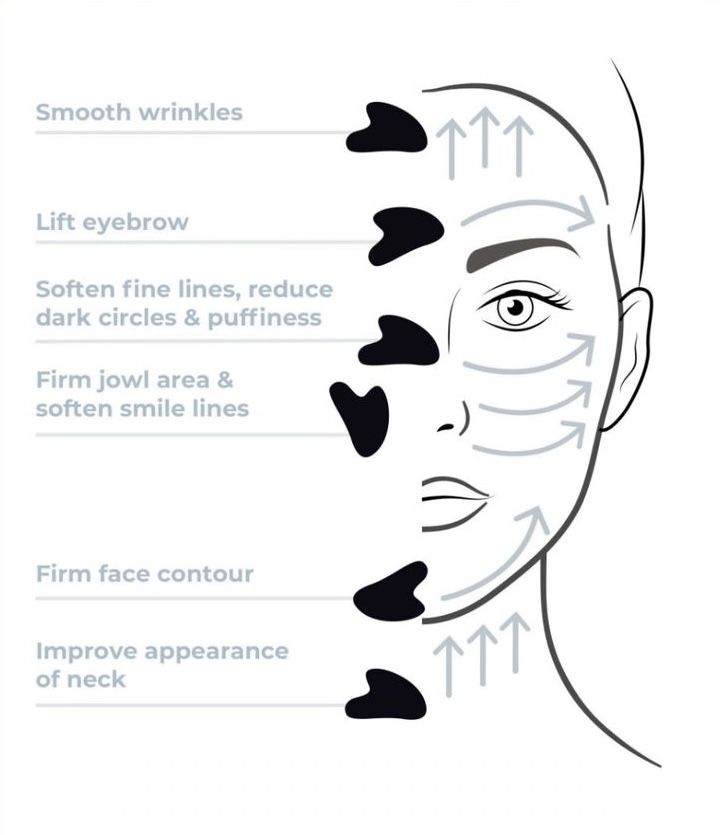
With the face oil applied, I begin using my Gua Sha tool in gentle, upward strokes. I start at my neck and work my way up to the jawline, cheeks, and forehead. The key is not to rush; I focus on each area and make sure I’m applying enough pressure to promote circulation but not so much that it feels uncomfortable. It’s a delicate balance—using just enough pressure to get the benefits without straining your face.
✅ Tip: For maximum benefits, I also make sure to move in the direction of the lymphatic drainage points—upward strokes along the jawline and cheeks, and gentle strokes towards the temples and hairline. This helps release tension and promotes better circulation.
Step 5: Repeat the Process for a Few Minutes
I usually spend around 5-10 minutes doing my full face with the Gua Sha tool. It’s important not to rush—taking my time gives the oil a chance to really penetrate the skin and helps me relax while doing the massage. I always make sure I’m being consistent with my movements, focusing on one area at a time and giving it a little extra love when needed.
Step 6: Let the Face Oil Absorb Fully
Once I finish my Gua Sha routine, I let the remaining face oil absorb fully into my skin. I usually give it a few minutes before moving on with my skincare routine. The oil should be completely absorbed by this point, leaving my skin feeling hydrated, smooth, and glowy—ready to face the day or night ahead.
By applying the face oil for Gua Sha in this way, I’ve noticed a huge difference in the results. My skin feels nourished, and the massage feels more effective and relaxing. It’s truly one of my favorite rituals for healthy, glowing skin!
Conclusion
In my journey with face oil for Gua Sha, I’ve come to realize how essential the right oil is for achieving glowing, healthy skin. From the texture and slip that helps your Gua Sha tool glide effortlessly, to the nourishing properties that hydrate and balance your complexion, face oils truly enhance the experience. Whether you’re a Gua Sha newbie or a seasoned pro, finding the right face oil for your skin type, applying it properly, and understanding the benefits it provides can transform your skincare routine.
As I’ve learned through trial and error, the right face oil can make all the difference. It’s not just about how your skin feels during the routine, but the long-term benefits that will leave you with smoother, firmer, and more radiant skin. So, take your time in choosing a face oil that works for your skin and enjoy the ritual of Gua Sha—it’s more than just a facial massage; it’s an investment in your skin’s health and vitality.
If you’re ready to elevate your Gua Sha routine, I truly believe a good face oil for Gua Sha is the secret ingredient you’ve been missing. Don’t forget to experiment and find what works best for you. Your skin will thank you!